
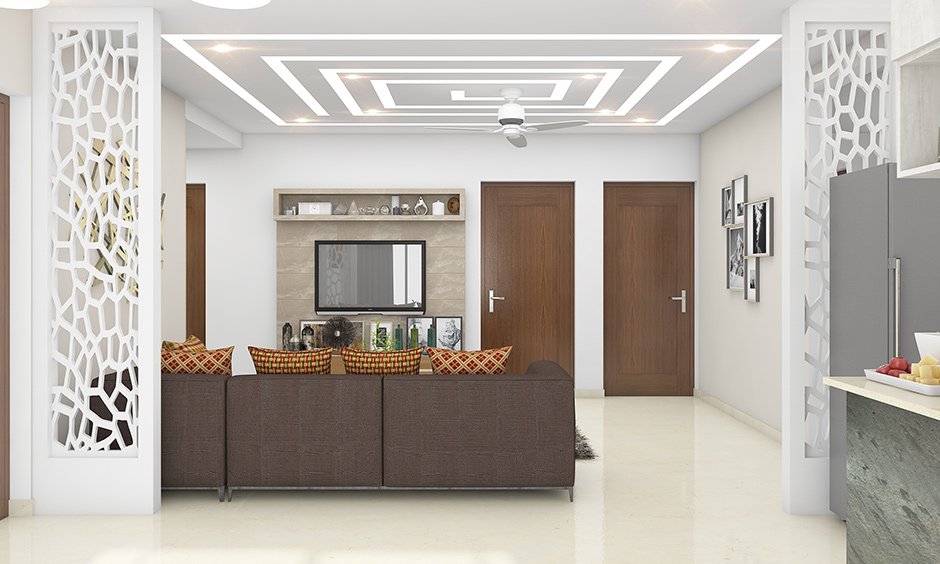

The false ceiling in contemporary Indian homes has developed into a crucial component of interior design that maximizes space, increases lighting, and enhances aesthetics. It is no more merely a practical feature. False ceilings, sometimes referred to as drop ceilings or suspended ceilings, give homeowners an inventive method to turn plain rooms into chic, fashionable living areas. In India, false ceilings are now a crucial component of modern house décor because they come in a vast array of materials, patterns, and lighting options.
The ability of fake ceilings to hide ugly features like electrical wiring, ducting, and uneven plaster is one of the reasons they have become more and more popular in Indian homes. False ceilings add to a tidy and well-organized appearance by producing a smooth, consistent surface. Additionally, they aid in enhancing air circulation, insulation, and soundproofing, which makes rooms more pleasant all year round—especially crucial given India’s varied environment.
False ceilings have become popular in Indian interior design because of their adaptability and versatility. There is a false ceiling design that goes well with both modern minimalism and historic décor in the house. Gypsum board, POP (plaster of Paris), wood, metal, and PVC panels are common materials. Gypsum boards are preferred because of their easy modification and fine finish. POP provides versatility and complex design options, particularly for layered and curved effects. While metal and PVC panels are frequently selected for their longevity and ease of care, wood adds warmth and texture, creating a timeless and natural appeal.
False ceilings present countless design opportunities. Multi-level and layered designs are particularly popular right now since they give spaces depth and dimension. Different forms and heights are used in these designs to produce dynamic visual interest. To draw attention to the furnishings and artwork below, a living room can, for instance, have a central recessed panel around by perimeter lighting. Open-plan environments can seem divided without the need of walls thanks to these multi-layered ceilings that designate various zones.
In the creation of fake ceilings, geometric patterns have also gained popularity. When placed in intriguing patterns, hexagons, squares, rectangles, and circles offer ceilings a contemporary and creative appearance. Depending on the desired style, these patterns can be either basic or intricate. Geometric fake ceilings add a modern feel that complements urban Indian homes when combined with imaginative lighting options.
When designing a fake ceiling, lighting is essential since it enhances the atmosphere of the room. Spotlights built into false ceilings, cove lighting, and recessed LED lighting are becoming more and more popular among Indian homes. These lighting choices offer both ornamental effects and useful illumination. A soft, diffused glow that improves the ambiance without being harsh is produced, for example, by indirect cove lighting along the margins of a false ceiling. Recessed spotlights, on the other hand, might draw attention to architectural details or artwork, enhancing the visual experience.
Bedroom false ceilings are frequently made to feel peaceful and comfortable. Warm lighting, simple layers, and gentle curves create a calm space that is ideal for sleeping. More lively and colorful fake ceiling designs that use colors and creative shapes are becoming more and more popular in kid-friendly rooms and creative areas. In addition to being aesthetically pleasing, these designs encourage fun and creativity.
In order to blend in with traditional Indian dining furniture and décor, fake ceilings for eating areas frequently incorporate textures or wooden beams. Mealtimes are made richer and more festive with such designs. Many Indian homeowners strive for a balance between legacy and modern style, which can be elegantly achieved by combining traditional themes with contemporary false ceiling techniques.
False ceilings in kitchens are useful in addition to being aesthetically pleasing. The ceiling will stay sturdy and brighten what is frequently a small space thanks to moisture-resistant materials and designs that take ventilation and lighting requirements into account. Kitchens can be made more aesthetically pleasing and functional with the addition of simple, clean-lined fake ceilings with integrated task lighting.
The most ornate false ceiling treatment is frequently found in living rooms, which are important gathering places in Indian houses. To achieve an opulent look, designers may blend contrasting textures and materials with layered designs. Incorporating mirrors, metallic accents, and even creative panels into fake ceilings may add glitz and reflect light, creating an air of spaciousness and invitingness.
The general architectural style and design of the house should be taken into account when choosing a false ceiling design. For example, a fake ceiling with hardwood panels and delicately carved detailing may look good in a traditional Indian home with elaborate woodwork and classical furnishings. On the other hand, sleek, geometric shapes with integrated LED lights would look great in a modern flat with minimalist décor.
Practical issues also include installation and maintenance. Although gypsum or POP false ceilings are simpler to customize, expert installation is necessary to guarantee their longevity. Treatment is necessary to protect wooden ceilings from moisture, particularly during India’s monsoon season. Metal and PVC panels are long-lasting and easy to clean, making them appropriate for bathrooms and kitchens.
False ceilings are also excellent for acoustics. False ceilings can greatly lower noise levels in spaces by utilizing layered designs and sound-absorbing materials. In urban Indian households, where outside noise can be an issue, this is especially helpful. Soundproof false ceilings increase seclusion and foster a calm atmosphere in the house.
Another benefit is energy efficiency. By adding another layer of insulation between the living area and the roof, false ceilings aid in room insulation. This helps keep the space warm in the winter and lessens the amount of heat that enters during India’s scorching summers. By lessening the strain on heating and cooling systems, the insulation that false ceilings provide can help save energy costs.
Smart home technology has also been included into artificial ceilings in recent years. Convenience and contemporary style are added to the house with LED strips that have motion sensors, automated lighting control, and color and brightness adjustments. With the help of these technologies, homeowners can easily create various settings and moods, improving their quality of life.
In conclusion, artificial ceilings are a chic and adaptable element that can change Indian homes in a variety of ways. They are a great investment for any homeowner because of their capacity to hide, adorn, and improve functionality. There are innumerable fake ceiling designs that suit Indian tastes and lifestyles, regardless of the inclination for traditional elegance or modern chic.
False ceilings, which range from multi-level gypsum board designs to wooden panel accents and creative lighting solutions, greatly enhance a home’s ambiance and coziness. They guarantee that Indian houses stay lovely, cozy, and effective all year round by fusing aesthetics and functionality. The inventiveness and uniqueness of fake ceiling designs will only grow as trends continue to change, providing home décor fans with even more fascinating options.
A room’s size, ceiling height, lighting requirements, and personal style preferences are all important considerations when selecting a fake ceiling design. To ensure that the fake ceiling not only blends in with the architecture of your house but also improves your quality of life there, speaking with skilled interior designers may assist realize your goal.
In the end, the ideal fake ceiling design is one that enhances your home’s long-term worth, fits your lifestyle, and expresses your personality. A false ceiling may be the focal point of your Indian home’s interior with the correct planning and installation, making it a chic and welcoming area for both family and visitors.